Body Mass Index (BMI) Calculator & Calorie Counter

What Is Body Mass Index (BMI)?
Body Mass Index, commonly called BMI, is one of the simplest and most widely used methods to estimate whether a person has a healthy body weight. It compares your weight to your height and gives a number that helps classify your weight status.
A BMI calculator works by dividing your weight by the square of your height (regardless of the units used, e.g. kg, ounces, centimeters or meters). Although it does not directly measure body fat, it is strongly correlated with total body fat for most adults and is widely used by doctors, fitness trainers, and health organizations.
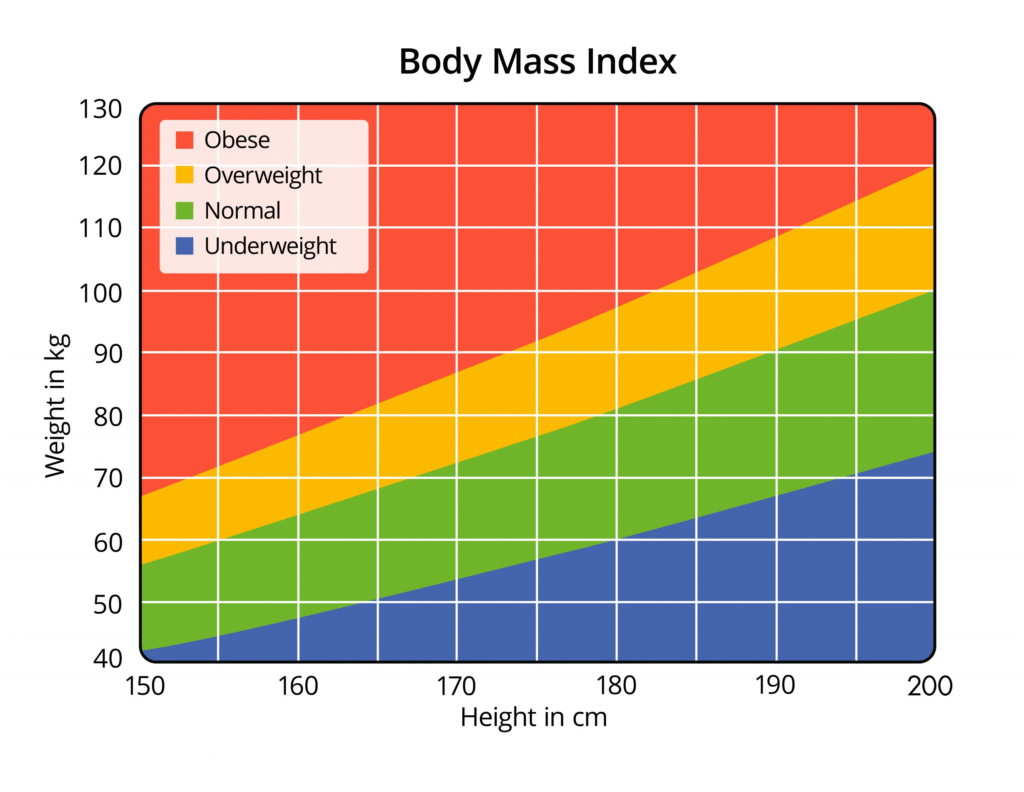
People use a BMI calculator because it provides a quick understanding of whether they are underweight, normal weight, overweight, or obese. This information helps you identify potential health risks (listed below) and take action early.
Your BMI is important because weight problems are linked to conditions such as:
- Heart disease: A high BMI increases body fat, which raises cholesterol and strains the heart, increasing risk of heart attacks.
- Diabetes: Excess body fat makes the body resistant to insulin, leading to type 2 diabetes.
- High blood pressure: Extra weight forces the heart to pump harder to circulate blood, raising blood pressure.
- Stroke: High BMI contributes to clogged arteries and high blood pressure, which can block blood flow to the brain.
- Joint problems: More body weight puts pressure on knees and hips, causing pain and osteoarthritis.
- Hormonal problems: Excess fat disrupts hormone balance, affecting metabolism, fertility, and menstrual cycles.
By regularly checking your body mass index, you can track changes in your body and make better health decisions.
Healthy BMI Ranges – Interpreting Body Mass Index Values
Once you calculate your body mass index, the number falls into one of the standard weight categories.
| BMI Range | Category |
|---|---|
| Below 18.5 | Underweight |
| 18.5 – 24.9 | Healthy weight |
| 25 – 29.9 | Overweight |
| 30 and above | Obese |
| Source: National Heart, Lung and Body Institute |
Underweight
If your BMI is below 18.5, your body may not have enough fat and muscle for proper hormonal and immune function. You may experience fatigue, hair loss, and low immunity. The treatment for an underweight person with low BMI is to increase your nutritional intake of healthy food items from all food groups.
Healthy Weight
A BMI between 18.5 and 24.9 is considered ideal. People in this range have the lowest risk of chronic diseases and typically maintain better energy levels and metabolic health.
Overweight
A BMI between 25 and 29.9 indicates extra body fat accumulation. The treatment for a high BMI is to introduce simple lifestyle changes that can easily reverse the condition and prevent long-term complications.
Obese
A BMI above 30 increases the risk of diabetes, heart disease, and metabolic syndrome. However, the treatment for obesity and a high BMI is to make adjustment to your diet and exercise routine to gradually reduce weight. This will significantly reduces these risks.
Remember: BMI is a screening tool, not a diagnosis. Athletes and muscular individuals may have a high BMI but low body fat. That is why a body fat calculator provides additional accuracy.
Understanding Calories and Metabolism
Calories are units of energy your body uses to perform basic functions such as breathing, digestion, and movement.
Your body burns calories in three main ways:
- Basal metabolic rate (BMR)
- Physical activity
- Digestion of food
Your calorie calculator estimates how many calories your body needs daily to maintain weight.
What Is BMR?
BMR stands for Basal Metabolic Rate. It represents the calories your body burns at rest to keep you alive.
Even if you sleep all day, your body still burns calories for:
- Brain function
- Heart beating
- Body temperature regulation
- Hormone production
Your BMR depends on:
- Age
- Gender
- Height
- Weight
- Muscle mass
After calculating BMR, activity level is applied to estimate daily calorie needs.
Daily Calorie Needs
Here is a general guide:
| Goal | Calorie Intake |
|---|---|
| Weight loss | Maintenance – 500 kcal |
| Weight maintenance | Maintenance calories |
| Weight gain | Maintenance + 300–500 kcal |
A calorie calculator helps personalize these numbers for your body instead of guessing.
How Weight Loss Actually Works
Weight loss is not about starving yourself. It is about creating a small and consistent calorie deficit.
If you consume fewer calories than your body burns, your body uses stored fat for energy.
Safe Fat Loss Rate
Healthy weight loss:
0.5 – 1 kg per week
Faster weight loss usually leads to muscle loss and metabolic slowdown.
Tips to Lose Weight Safely
1. Focus on Protein
Protein helps preserve muscle and reduces hunger.
Good sources:
- Eggs
- Chicken
- Fish
- Lentils
- Yogurt
2. Reduce Liquid Calories
Sugary drinks often add hundreds of calories without fullness.
Avoid:
- Soda
- Sweet tea
- Energy drinks
3. Walk Daily
Walking 7,000–10,000 steps daily significantly improves fat loss and heart health.
4. Sleep Properly
Poor sleep increases hunger hormones and fat storage.
Aim for 7–9 hours per night.
5. Strength Training
Muscle burns more calories than fat. Even simple home exercises help.
Importance of Water Intake
Hydration is often ignored in weight management. A water intake calculator estimates how much water your body needs daily.
Water helps:
- Control appetite
- Improve metabolism
- Flush toxins
- Improve digestion
- Increase energy
A common recommendation is about 30–35 ml per kg of body weight.
For example:
70 kg person ≈ 2.3 liters per day
Drinking water before meals also reduces calorie intake naturally.
Combining All Calculators for Best Results
Each calculator serves a different purpose:
- BMI calculator → weight category
- Body fat calculator → fat percentage
- Calorie calculator → daily energy needs
- Water intake calculator → hydration requirement
Together they create a complete health overview.
Instead of guessing what your body needs, you get measurable data to guide decisions.
Frequently Asked Questions
Is BMI accurate?
BMI is accurate for most people but not perfect for athletes. Combining BMI with body fat percentage improves accuracy.
How often should I calculate BMI?
Once every 2–4 weeks is enough to track progress.
How many calories should I eat to lose weight?
Typically 300–500 calories below maintenance level calculated by a calorie calculator.
Can drinking more water help weight loss?
Yes. Proper hydration improves metabolism and reduces appetite.
Final Thoughts
Monitoring your health does not require expensive devices or lab tests. Using a BMI calculator, calorie calculator, body fat calculator, and water intake calculator gives powerful insight into your body.
These tools help you:
- Understand your body mass index
- Estimate daily energy needs
- Track fat levels
- Improve hydration
- Plan weight loss safely
Consistency matters more than perfection. Small daily improvements lead to long-term health results.
Start by calculating your numbers above and use them as your baseline. Then adjust diet, activity, and hydration gradually.
Healthy changes made today can prevent serious diseases tomorrow.